Building Bridges: Helping Your Child Transition from Home to School
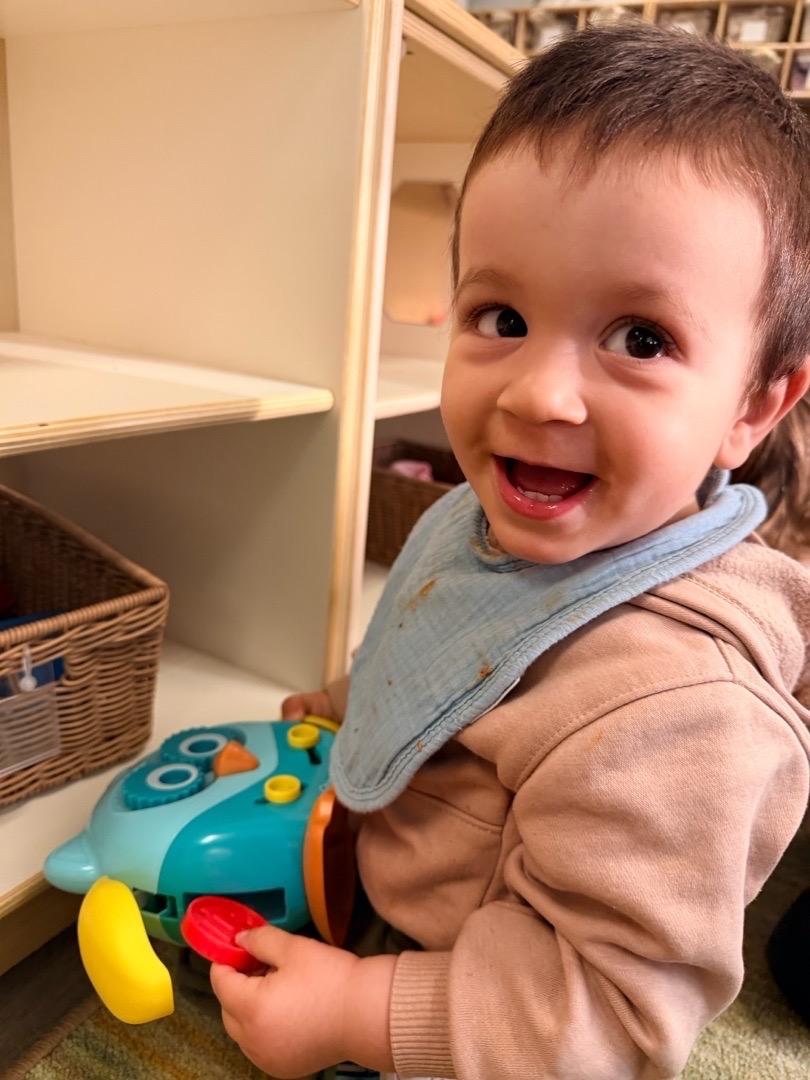
Building Bridges: Helping Your Child Transition from Home to School
The transition from home to school is one of the most meaningful milestones in early childhood. For many families, it’s a moment filled with excitement, pride, and naturally a bit of uncertainty. Whether your child is six weeks old or preparing for Pre‑K, stepping into a new environment represents a major developmental shift. Decades of research show that children thrive when transitions are intentional, predictable, and supported by strong relationships between families and educators.
At Peacock Learning Academy, we view transitions not as hurdles, but as opportunities to build confidence, emotional security, and a lifelong love of learning. Our structured, center‑based model, paired with nurturing teacher‑child relationships, creates a bridge that gently guides children from the comfort of home into a world of exploration, independence, and growth.
This blog explores the science behind early childhood transitions, why they matter, and how our practices at Peacock Learning Academy help children feel safe, supported, and ready to learn.
Why Transitions Matter: The Science Behind Early Childhood Adjustment
1. The Brain Needs Predictability
Young children thrive on routine. Neuroscience research shows that predictable environments reduce cortisol (the stress hormone) and support the development of the prefrontal cortex—the part of the brain responsible for emotional regulation and executive functioning (Center on the Developing Child, Harvard University).
When children know what to expect, their brains can shift from “survival mode” to “learning mode.”
How Peacock Learning Academy supports this:
Every classroom—from Infants to Pre‑K—follows a consistent daily schedule. Children engage in center‑based rotations, predictable routines, and structured transitions that help them feel secure. Visual cues, songs, and teacher‑guided prompts signal what comes next, reducing anxiety and building confidence.
2. Attachment Theory: Relationships Are the Foundation
According to attachment theory (Bowlby, Ainsworth), children form secure attachments when caregivers are responsive, warm, and consistent. These secure attachments act as a “home base,” allowing children to explore new environments with confidence.
When transitioning to school, children rely on teachers to become part of their circle of trust.
How Peacock Learning Academy supports this:
We intentionally keep small class sizes and low teacher‑to‑child ratios, allowing educators to build meaningful relationships with each child. Teachers greet children by name, engage in warm conversation, and use responsive caregiving practices that mirror the emotional security children experience at home.
3. Emotional Regulation Develops Through Co‑Regulation
Young children are not born with the ability to regulate their emotions—they learn it through co‑regulation with adults. Research from the National Scientific Council on the Developing Child shows that children need calm, attuned adults to help them navigate big feelings.
How Peacock Learning Academy supports this:
Our teachers model emotional language, validate feelings, and guide children through transitions using gentle prompts, breathing exercises, a designated calm down corner and predictable routines. In the Twos, Preschool, and Pre‑K classrooms, social‑emotional learning is embedded into daily activities, helping children build resilience and self‑control.
4. Early Transitions Shape Long‑Term School Success
Studies show that children who experience smooth early transitions demonstrate:
- Higher academic achievement
- Better social skills
- Stronger relationships with peers and teachers
- Greater independence and confidence
(LoCasale‑Crouch et al., 2008)
How Peacock Learning Academy Builds a Bridge from Home to School
Our approach is rooted in developmental science and designed to support children at every age level. Here’s how we help children transition smoothly into our nurturing, structured learning environment.
Infants (6 weeks – 12 months): Building Trust Through Sensory Connection
For infants, the transition to school is primarily about forming secure attachments and experiencing the world through their senses.
What the Science Says
Infants rely on consistent, responsive caregiving to develop trust and emotional security. Research shows that early sensory experiences shape neural pathways that support language, motor development, and social engagement.
How We Support Infant Transitions
- Individualized schedules for feeding, diapering, and napping mirror home routines.
- Sensory‑rich experiences—music, storytelling, baby signing, and tactile play—help infants feel engaged and comforted.
- Teacher responsiveness ensures infants feel seen, heard, and safe.
- Daily communication through Brightwheel keeps families connected and reassured.
By aligning home routines with classroom rhythms, infants experience a seamless transition into The Nest.
Ones (12 months – 2 years): Encouraging Independence Through Structure
Toddlers entering the Ones classroom are beginning to assert independence while still needing strong emotional support.
What the Science Says
Toddlers thrive when they can explore freely within a structured environment. Research shows that early autonomy builds confidence and supports cognitive development.
How We Support Toddler Transitions
- Center‑based rotations introduce predictable and structured learning routines.
- Self‑help skills—handwashing, retrieving water bottles, cleaning up—build independence.
- Music, movement, and sensory play help toddlers regulate emotions and stay engaged.
- Powerful teacher‑child interactions and relationships support toddlers through separation anxiety and new routines.
Our Hatchlings classroom creates a gentle bridge between home comfort and structured learning.
Twos (2 – 3 years): Supporting Emotional Growth and Problem‑Solving
The Twos classroom is where language, self‑regulation, and social skills begin to flourish.
What the Science Says
At this age, children experience rapid growth in vocabulary, emotional awareness, and problem‑solving. Research shows that small‑group instruction enhances learning by providing individualized support.
How We Support Transitions for Twos
- Small‑group, teacher‑led centers in literacy, math, STEAM, sensory and social play.
- Social‑emotional learning embedded into daily routines.
- Outdoor discovery and movement activities to support motor development and reduce stress.
- Consistent routines that help children understand expectations and build confidence.
Our Peachicks classroom helps children develop the emotional and cognitive skills needed for preschool readiness.
Preschool (3 – 4 years): Strengthening Academic Foundations Through Exploration
Preschoolers are eager learners who thrive on hands‑on experiences and guided discovery.
What the Science Says
Research shows that early literacy and numeracy skills are strong predictors of later academic success. Structured, play‑based learning supports both cognitive and social development.
How We Support Preschool Transitions
- New Jersey State curriculum‑aligned content delivered through small‑group rotations.
- STEAM, dramatic play, sensory exploration, and creative arts to support whole‑child development.
- Nightly homework builds responsibility and mirrors Pre‑K expectations.
- Teacher‑guided discussions help children build language, reasoning, and social skills.
The Flock classroom prepares children for the academic and social expectations of Pre‑K.
Pre‑K (4 – 5 years): Preparing for Kindergarten and Beyond
Pre‑K is a pivotal year where children develop the skills needed for a successful transition into elementary school.
What the Science Says
Children who enter kindergarten with strong early literacy, numeracy, and self‑regulation skills demonstrate long‑term academic success. Scaffolded instruction where teachers gradually release responsibility supports mastery and independence.
How We Support Pre‑K Transitions
- New Jersey State curriculum‑aligned content in reading, math, and early writing.
- Sight words, vowel sounds, consonant blends, and foundational literacy skills.
- Math concepts including number recognition, one‑to‑one correspondence, addition, and geometry.
- Nightly homework and content review to build responsibility and strengthen retention.
- Small‑group rotations ensure individualized instruction and deeper engagement.
Our Peacocks classroom ensures children leave Pre‑K confident, capable, and fully prepared for kindergarten.
How Families Can Support the Transition at Home
While Peacock Learning Academy provides a strong foundation, families play an essential role in easing the transition from home to school.
1. Establish Predictable Routines
Consistent wake‑up times, meal schedules, and bedtime routines help children feel grounded.
2. Talk Positively About School
Children absorb your emotions. When you speak with excitement, they feel excited too.
3. Practice Separation in Small Steps
Short separations with trusted caregivers help children build confidence.
4. Create a Goodbye Ritual
A special phrase, hug, or handshake provides comfort and predictability.
5. Stay Connected Through Brightwheel
Daily updates, photos, and messages help bridge the gap between home and school.
Final Thoughts: Transitions Are Bridges, Not Barriers
At Peacock Learning Academy, we believe that every transition is an opportunity to build resilience, confidence, and joy in learning. By combining research‑based practices with nurturing relationships and structured routines, we help children feel safe, supported, and ready to thrive.
The journey from home to school is not a leap; it’s a bridge. And we’re honored to walk that bridge with your family every step of the way.
Resources:
- Bowlby, J. (1988). A Secure Base: Parent-Child Attachment and Healthy Human Development.
- Ainsworth, M. (1979). Infant–mother attachment. American Psychologist.
- Center on the Developing Child at Harvard University. (2011). Building the Brain’s “Air Traffic Control” System.
- LoCasale‑Crouch, J., et al. (2008). The transition to kindergarten: A review of current research. Early Childhood Research Quarterly.
- National Scientific Council on the Developing Child. (2004). Children’s Emotional Development Is Built into the Architecture of Their Brains.

Sejal Dave, Owner and Director
Peacock Learning Academy